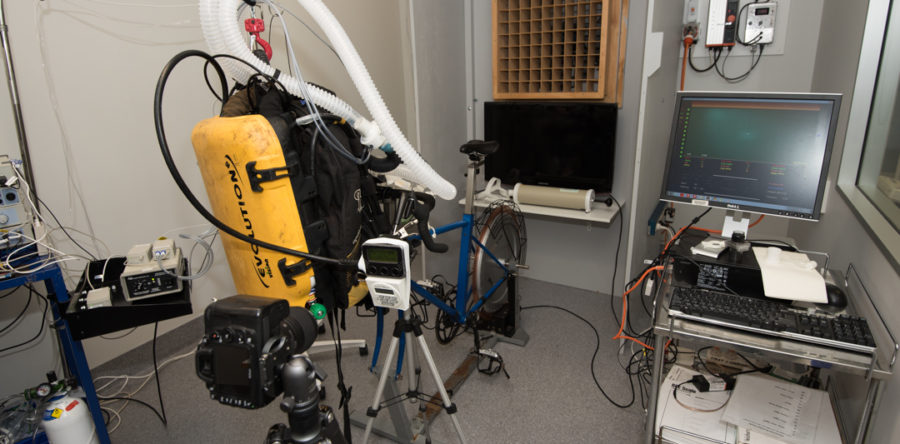
Carbon dioxide (CO2) is a by-product of the metabolism of oxygen in the body. It is eliminated by breathing but for various reasons that will be briefly discussed, diving (both on open circuit and rebreathers) exposes us to risk factors for CO2 “retention”. This is important because elevated CO2 has many potentially deleterious effects in diving including producing unpleasant symptoms, enhancing narcosis, and increasing the risk of cerebral oxygen toxicity. The presentation will then cover 3 related studies recently completed in the Exercise Neurometabolism Laboratory at the University of Auckland. Two of these are being presented for the first time publicly at Tech Dive USA. The first study investigated the ability of divers to detect a problem with the CO2 scrubber in a rebreather during a 5 minute prebreathe. We found that 25% of divers failed to detect the complete absence of a CO2 scrubber and 90% failed to detect a partial bypass problem that caused rebreathing of significant amounts of CO2. The second study was a head to head comparison of the CO2 absorbing capability of two sodalime preparations (sofnolime 797 and spherasorb) commonly used in rebreathers. The third study was an investigation of the effect of storage conditions on the life of a partly used CO2 scrubber canister. When setting a partly used canister aside for a month should you store it in a sealed bag, or is “on the shelf” OK? And do the storage conditions make any difference if you are just storing it overnight? The data from these latter two studies will be presented.