
“Ghost fishing“ is a term used to describe what occurs with abandoned or lost commercial fishing gear that inevitably continues to fish.
Ghost fishing first gained global recognition in 1985 at the 16th session of the FAO Committee on fisheries. Across the scientific literature, ghost fishing is universally recognized as detrimental to the environment and the fish stocks. When commercial fishing gear is lost or abandoned, it will continue to fish for months, years, perhaps even indefinitely. This is due to the sturdy, non-biodegradable materials that fishing nets and pots are typically made of.
The true extent of the ghost fishing problem cannot ever be quantified, due to lost gear that is never retrieved, therefore becoming lost data. There are also ghost nets well beyond scuba diving depths.
 Despite lost data, there are still plenty of numbers to work with. The effects of ghost fishing stem from two resources: reports from deliberate cleanup efforts and from controlled studies. In both instances, numbers and species of animals killed or trapped are recorded. With deliberate cleanups, tonnage and type of gear are tracked. On a somewhat happier note, an Australian publication lists the numbers of sea turtles rescued from recovered ghost nets.
Over the last few years, our dedicated volunteers in Southern California have been responsible for cleaning up thousands of pounds of ghost nets, and rescuing innumerable lives. While this may seem impressive, it would actually be far more impressive if we did not have to conduct such activities in the first place.
The origin of abandoned or lost commercial fishing gear stems from the incessant demand for seafood. It is highly unrealistic to believe that the world will ever cease to consume seafood; therefore it is reasonable to assume that there will always be some degree of ghost gear.
Ghost Fishing was founded in the Netherlands by Pascal van Erp and Cas Renooij, two Global Underwater Explorers (GUE) technical divers. They dive mostly in the North Sea, spending a lot of time cleaning up ghost nets. Ghost Fishing now has projects in 14 countries, all using GUE trained divers.
There are many groups that interact to make the work possible. For starters, we have Star Sock and Aquafil; together they founded Healthy Seas (www.healthyseas.org <http://www.healthyseas.org> ). Healthy Seas’ main objective is to turn ocean waste, namely ghost nets, into sustainable products such as socks, bathing suits, carpets. Partners of Healthy Seas include Ghost Fishing and Los Angeles Underwater Explorers (LAUE).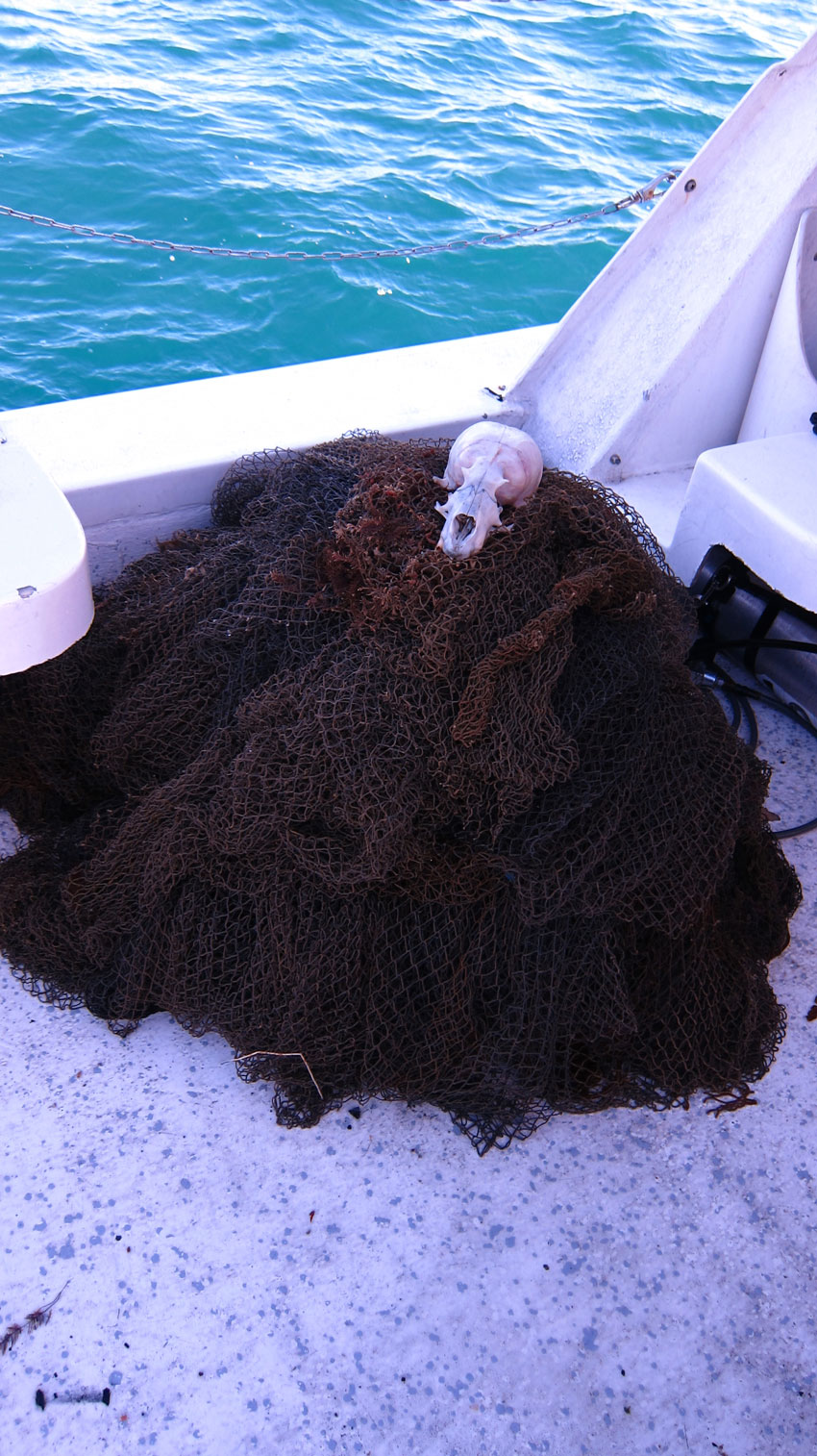
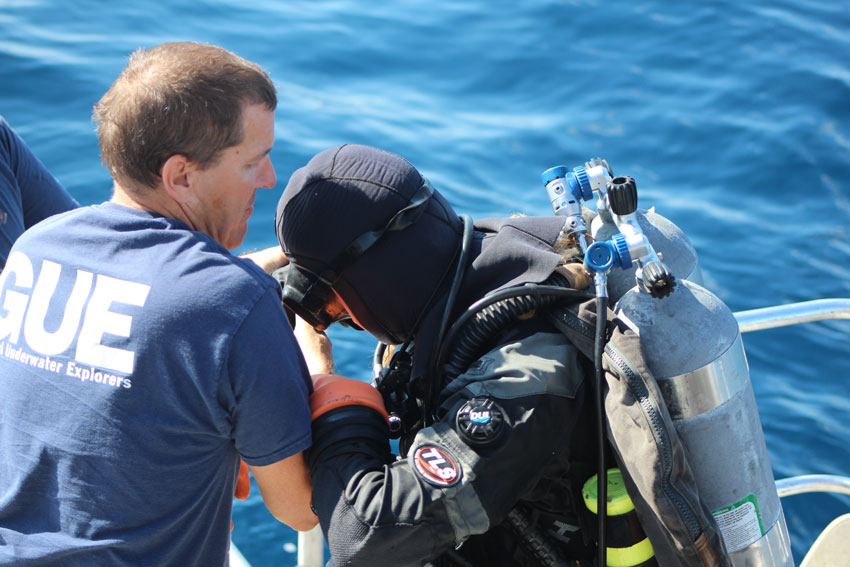
Ghost Fishing gets worldwide support from GUE divers working in their respective areas. In Southern California, that includes LAUE and San Diego Underwater Explorers (SDUE). We are fortunate to have such an impressive pool of volunteers. Each and every one has played an integral role in the work that we do, whether it is their diving qualifications, seamanship, journalism, or photography/ videography skills. It is critical to mention that ghost net removal is incredibly hazardous work, and we do not endorse such projects without having had proper training.
Unfortunately there is no shortage of work for us to do. We have several dive sites (usually shipwrecks or other sunken structures) in recreational and technical depths that have ghost nets. Since we are a very active group of divers, we are intimately familiar with numerous sites and are privy to updates on a regular basis (such as, a newly discarded net) through word of mouth in the diving community.
A ghost net removal project begins with a reconnaissance dive. We must ascertain depth; type of net; condition of the net; and draw a basic sketch of the structure along with video and/or photos. All of this information will be used in the dive briefing for the actual cleanup.
In Southern California, we usually organize a cleanup dive once a month. We are now recycling our recovered ghost nets through Aquafil/ Healthy Seas.
Karim Hamza

