What's New?

Carbon dioxide: some new perspectives on the old enemy
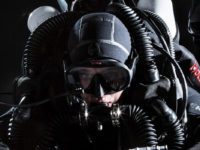
Carbon dioxide (CO2) is a by-product of the metabolism of oxygen in the body. It is eliminated by breathing but for various reasons that will be briefly discussed, diving (both on open circuit and rebreathers) exposes us to risk factors for CO2 “retention”. This is important because elevated CO2 has many potentially deleterious effects in…
Read more

PUSHING THE ENVELOPE: The People, Projects & Technologies Behind the Tech Diving Revolution

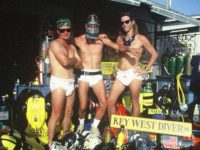
[caption id="attachment_2125" align="alignnone" width="700"] 1998 Britannic Expedition team. Photo from Leigh Bishop[/caption] TEKDiveUSA.2016 will have a special component this year. We will  presents a unique photographic exhibit celebrating the people, projects and technologies that helped create the “technical diving revolution” (1987-1997). Curated by aquaCORPS Journal founder Michael Menduno, the exhibit will feature over 100 images,…
Read more

Scrubber Monitoring & Work Of Breathing

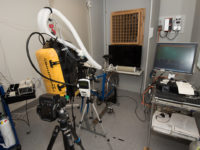
A breathing apparatus is necessary if you want to breathe underwater. How do you know that it easy enough to breathe on it? Does your rebreather actually give the right O2 level? Most of such answers can be had from test with breathing simulators, water and pressure chambers. This talk will explain how some of the tests are done and…
Read more

Zodiac Connection

Rob Palmer’s name is connected forever with this system. Left dormant for thirty years, besides few explorers diving it occasionally, Cristina has recently resumed a constant exploration and completed some interesting discoveries and connection, turning the Zodiac System into the Zodiac Connection. [caption id="attachment_214" align="alignnone" width="245"] Cristina Zenato[/caption]
Read more

Cuba: The Next Frontier for Karst Explorers

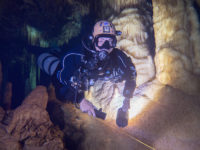
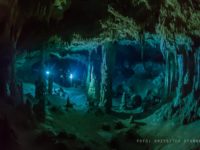
Embargos and scant infrastructure have meant that Cuba has existed in the dark ages for cave explorers. A few fortunate cave divers have carved out diving relationships over the last two decades and yet the sheer wealth of cave resources has barely been touched. In early 2015, Jill Heinerth, Kenny Broad and Bil Phillips joined…
Read more

The fight for Abaco Island’s Crystal Caves National Conservation Area

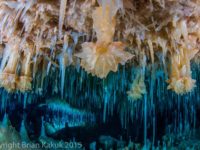
Exploration and Conservation of the world’s most beautifully decorated and scientifically significant underwater caves By Brian Kakuk Beneath a beautiful, pine-forested island in the Northern Bahamas lies over 10 miles of nature’s most exquisite and time wrought underwater caves. Known as the Crystal Caves of Abaco, these systems have been explored by a handful of…
Read more

Molecular Medicine and Diving

Advancements in molecular medicine, a field focused on the molecular, genetic, and cellular changes or influences in disease or injury processes, are becoming increasingly important with respect to diagnostics, treatment of diseases and developing an improved understanding of what is happening in a disease state or following an injury. This presentation will provide an overview…
Read more

Helium Penalty?

Breathing mixtures containing helium are used for deep dives, because helium is not narcotic and is less dense than nitrogen. In the late 1980's, pioneer technical divers adopted trimix (helium-nitrogen-oxygen) instead of heliox (helium-oxygen) for open-circuit deep diving. Trimix often contained a relatively low fraction of helium and high fraction of nitrogen, because these divers had limited infrastructure to mix…
Read more

WWII war wrecks of Gulf of Finland

Gulf of Finland was the most densely mined area in the whole world during World War II. Gulf of Finland saw two major evacuations during WWII, evacuations of Hanko and Tallinn. Russian Red Banner Fleet lost numerous warships and submarines. During the last years of war, Germany lost destroyers and U-boats while trying to keep…
Read more

Arctic cave diving

Nordic countries offer a few but wonderful opportunities for cave divers. There are plenty of mines with crystal clear waters, but the mostly granite ground is not suitable for natural caves to form. In the region of Rana in Norway, there are about 200 known caves. Most of them are not appropriate for diving, either…
Read more

Roman Shipwreck search and survey. The Antikythera Mechanism wreck

Found by sponge divers on standard dress using hand pumped air at 50-60 meters depth in 1901, the Roman Ship wreck off the North Eastern shore of the Island of Antikythera in Greece became famous for one particular artefact. The Antikythera Mechanism. Labeled the first analogue computer this fascinating and not fully understood artefact has…
Read more

Looking for Cave: Going Remote to Find Something New

Matt Vinzant will be presenting on cave exploration in the South East United States. Matt with a team of like-minded explorers has discovered a number of remote sinkholes and has been working to explore them.  Matt will discuss several new cave systems located in the Gulf of Mexico, a nearly mile long sidemount cave in…
Read more

In Water Recompression – Double blind study results and paper discussion

These subsea researchers have performed a study on In Water Recompression (IWR) which will change the way you think about this once controversial subject.  Attend this lecture and learn the results of this double blind study as well as the opinions published by the experts at the IWR Symposium.  [caption id="attachment_2031" align="alignnone" width="299"] Joseph Dituri[/caption]
Read more

Sidemount Simplified

Steve Lewis will be presenting on Sidemount Simplified. Sidemount diving: open or closed circuit. Some out there still eye it with suspicion, and remains for them it remains mysterious and misunderstood. Really! Hey, it’s just another way to carry cylinders of compressed gas, folks. Nothing magical, and in many ways safer and more useful than…
Read more

New Technologies In Explorations of Deep Caves

Krzysztof Starnawski will be presenting on some of the deepest, most extreme cave diving projects happening on the planet. He will discuss the organization of his cave expeditions and the use of dual sidemount CCR and underwater habitats. His underwater drills and dry caving techniques have led to unique dive plans and he will discuss…
Read more

Newfoundland: When the War Came to Canada

During WWII, the mines on Bell Island Newfoundland supplied iron ore that accounted for one -third of Canada's steel production. If Germany interrupted this flow of ore, even temporarily, the war effort could be seriously affected. On the night of September 4th, 1942, a German U-Boat brought the battle of the Atlantic to Canada’ s shores. The story of the lost ships and men and their connection to the now submerged mine offers a fascinating look at Canadian history. Jill Heinerth, Steve Lewis, Gemma Smith and Phil Short will present a panel discussion highlighted by their…
Read more

The NASA NEEMO Project: Exploring Human Spaceflight Dynamics Underwater

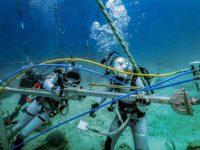
For more than a decade, NASA has used saturation diving from the Aquarius underwater habitat as a real world environmental analog that bridges the gap between simulation and actual spaceflight. Presenter Karl Shreeves has been part of the NEEMO team since its inception in 2001, and presents a pictorial overview of NEEMO's use of high…
Read more

Thoughtful Management of Decompression Stress

It is increasingly common for divers to rely on dive computers for their decompression safety, even (and perhaps more so) with extreme and complex exposures. While numerous decompression algorithms are available, they all rely on the pressure-time profile and mathematical strategies to estimate decompression status. Dive computers do not yet measure or integrate a multitude…
Read more

Decompression-Induced Bubbles – the Known, the Unknown, and the Implications

 Almost every diver thinks about bubbles in relation to decompression sickness, but many would be surprised by the gulf between what is held to be true and what is really known. This presentation will provide perspective on the current state of knowledge and technology, consider efforts to improve monitoring capabilities and, ultimately, our understanding. The…
Read more

Call It The Technical Diving Revolution! The Making of Technical Diving

Hosted by aquaCORPS Journal founder Michael Menduno, this panel will explore the emergence of technical diving in the late eighties/early nineties, and the transition to mixed gas diving with some of the pioneers who helped define and shape what is now recognized as the high-end of sport diving. Some of the issues we will be…
Read more

Safety Warning

WARNING: Scuba diving is an inherently dangerous sport that can result in serious injury or death if you do not receive the proper training and practice safe diving techniques. The ideas, topics and material presented at TEKDiveUSA are those of the presentor, and TEKDiveUSA LLC does not endorse, support, advocate or accept liability for any of said material / content.

Close Message

CLOSE
CLOSE